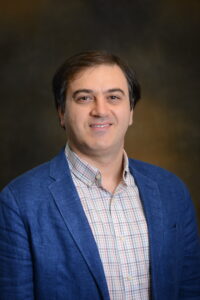
Title: Associate Professor
Company: Illinois Institute of Technology
Location: Chicago, Illinois, United States
Mohammad Asadi, PhD, Associate Professor at Illinois Institute of Technology, has been recognized by Marquis Who’s Who Top Engineers for dedication, achievements and leadership in the fields of Engineering Research and Academia.
Dr. Asadi has established a distinguished career in academia and research, currently serving as an associate professor at Illinois Institute of Technology since 2024. In this capacity, he conducts pioneering research on advanced materials for energy applications, manages a team of 10 individuals, including seven doctoral students and four postdoctoral researchers, provides critical feedback, reports data to sponsored agencies, and teaches electrochemistry to both graduate and undergraduate students, as well as fluid mechanics to undergraduates. Dr. Asadi’s leadership and mentorship have significantly contributed to his team’s academic and professional development.
Before his promotion to associate professor, Dr. Asadi excelled as an assistant professor on campus from 2017 to 2024. During this period, he expanded his research portfolio and furthered his commitment to education by developing innovative curricula and fostering collaborative projects within the department. Dr. Asadi’s efforts during these years laid the groundwork for his subsequent role and continued impact in the field.
From 2015 to 2017, Dr. Asadi served as a postdoctoral research associate at University of Illinois at Chicago in a joint project with Argonne National Laboratory. There, he pursued advanced research initiatives that deepened his expertise in materials science and electrochemistry, resulting in several high-impact publications in leading scientific journals, such as Nature and Science. These contributions are among Dr. Asadi’s most notable achievements, reflecting both the quality and significance of his work.
Earlier in his career, Dr. Asadi was a research assistant at the Nanomaterials & Energy System Laboratory at the University of Illinois at Chicago from 2012 to 2015. This formative experience provided him with hands-on training in nanomaterials development and energy systems, setting the stage for his future innovations.
Before entering academia, Dr. Asadi worked in the oil and gas industry for over five years, gaining practical experience that continues to inform his research approach and understanding of real-world engineering challenges.
Dr. Asadi’s academic background is equally impressive. He earned a Bachelor of Science in chemical engineering from Tabriz University of Technology in 2004, a Master of Science in chemical engineering from Sharif University of Technology in 2006, and a Doctor of Philosophy in mechanical engineering with a focus on materials development and electrochemistry from the University of Illinois at Chicago in 2015.
Active in his professional community, Dr. Asadi holds membership in several prominent organizations, including the American Association for the Advancement of Science, the Materials Research Society, the American Institute of Chemical Engineers and The Electrochemical Society. He is also affiliated with the Six Sigma Society and Sigma Xi.
Throughout his professional journey, Dr. Asadi has been recognized for his inventive contributions, including securing a patent in 2013 for transition-metal dichalcogenide-based catalysts for carbon dioxide reduction. His dedication has been recognized with several honors, including an Outstanding Research Award from Sigma Xi. Dr. Asadi attributes his accomplishments to hard work, collaboration with talented scientists and colleagues, mentorship from accomplished professionals and support from federal agencies that have funded his research.
Dr. Asadi values teamwork highly, crediting mentors, students, postdoctoral researchers and collaborators for helping him deepen his understanding of complex concepts and drive impactful innovation. Looking ahead, he is committed to advancing emerging technologies to broader public availability so that society can benefit from transformative innovations developed through his research.
For more information, please visit:
Contact Dr. Asadi: